The ZIMA piston can solves a fundamental problem of aerosol technology: keeping product and propellant strictly separated - while maintaining dosing that is mechanical, reproducible, and consistent throughout the entire product life.
Inside the ZIMA can are two separate chambers. The lower chamber contains the propellant; the upper chamber the product. A piston separates the two chambers.
When the user actuates the valve, the product is dispensed through it. The propellant stays in the lower chamber - its pressure pushes the piston mechanically upward, displacing the exact dose of product out of the upper chamber.
The valve sits at the top opening of the can and dispenses the product - the piston only separates product and propellant. As a result, any valve can be used. The dosing is a pure function of geometry - and is therefore physically reproducible.
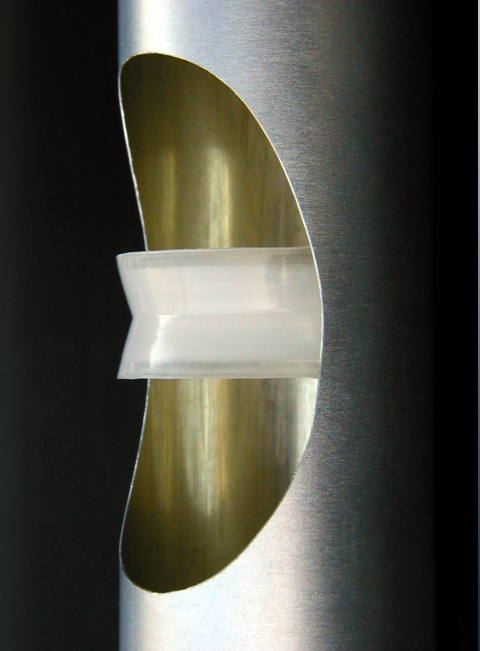
The piston only separates product and propellant - the product is dispensed through its own, top-mounted valve. As a result, any valve can be used.
Since product and propellant never come into contact, the chemical properties of the product are preserved over its entire life.
The dose remains constant over the entire canister life. The steady propellant pressure feeds the product evenly through the valve, so the dose stays consistent from first to last press.
Only product is dispensed, without propellant. Each dose consists solely of undiluted product. Dosing is therefore more precise, with no product-to-propellant ratio drift as in conventional aerosols.
Since the product is fully displaced from the chamber, no product remains stuck to the interior wall. Up to 15% more usable product per can.
PE, PP, TPU - and FDA/NSF-compliant material grades for pharmaceutical and food-grade applications.
How your formulation is transferred into a ZIMA system - from initial consulting to series approval.
Learn more →Injection molding tooling in Hungary, ISO-compliant manufacturing, 100% quality control.
Learn more →The patent, the claims, and what they mean for your market position.
Learn more →